
September 14, 2026
How to prepare for a sales call in ten minutes
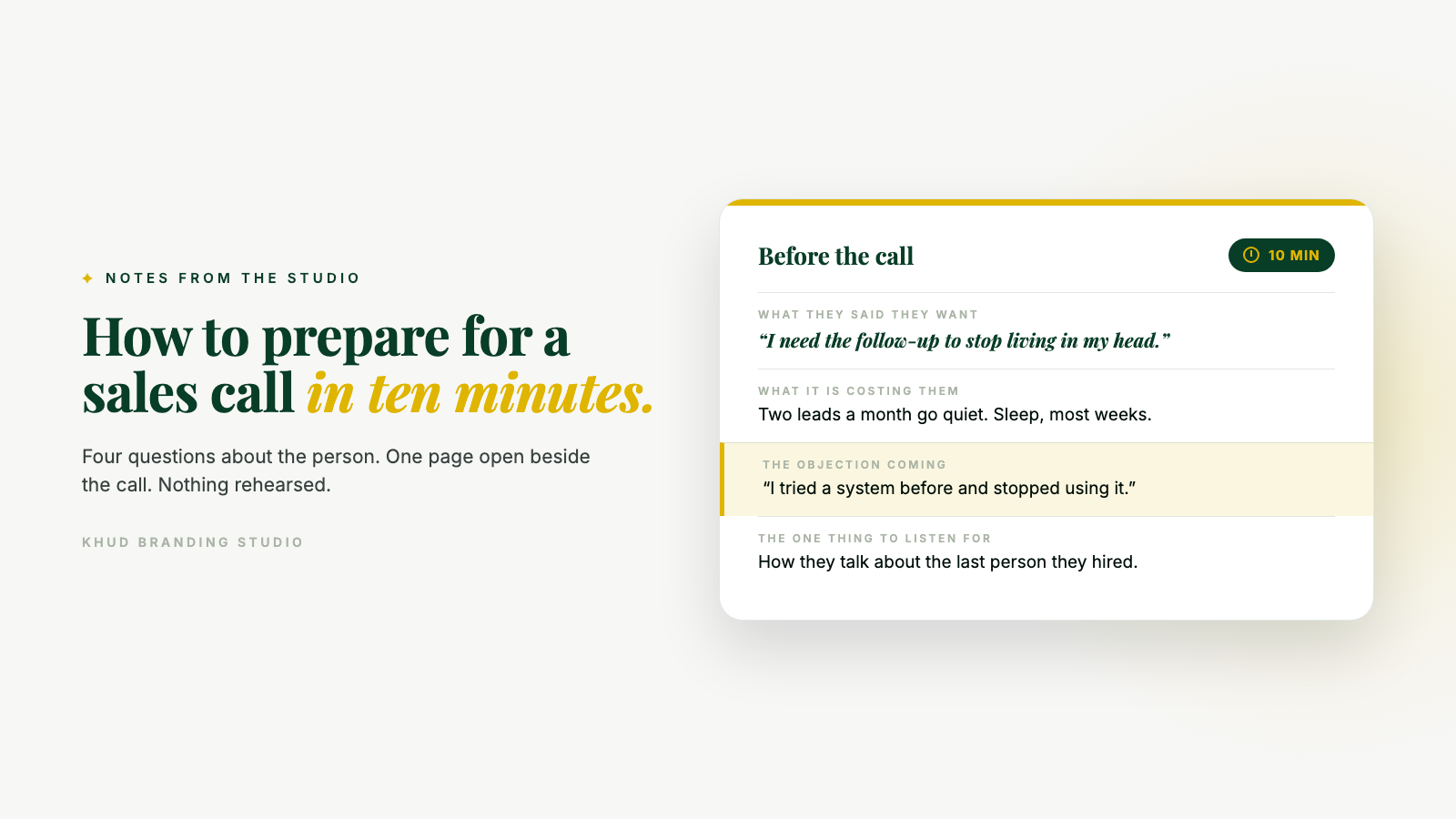
You have a call in ten minutes. You open the booking email to remember who it is. You skim their website, guess at what they want, and rehearse how you will describe your offer. The call starts. It goes fine. It ends with let me think about it.
You prepared for the pitch. The call needed you prepared for the person.
Why sales call prep usually fails
The instinct is to prepare what you will say. Your offer, your process, your price, your answers to the objections you have heard before. That preparation makes you sound polished and makes the call about you.
The calls that close are the ones where the client feels understood before they feel sold to. That means the ten minutes go to them. What they said. What it is costing them. What they will push back on. What to listen for. Diagnose Before You Prescribe™ is not a slogan for the call. It is the order of operations.
Ten minutes, four questions
Question one. What did they say they want, in their words. Not your translation of it. If they wrote it in a form, quote it. If they said it in a message, copy it. You will use their exact phrase on the call, and they will feel it.
Question two. What is it costing them right now. Time, money, sleep, a relationship, a reputation. If they did not say, make your best guess from what they did say, and mark it as a guess. The first thing you will do on the call is confirm it.
Question three. What will they object to. Price, time, whether it will work for them, whether they have tried this before. Every client has one objection they are already rehearsing. Name it before the call and you will hear it coming instead of flinching at it.
Question four. What is the one thing to listen for. The detail that tells you whether this is a fit. Sometimes it is a date. Sometimes it is the way they talk about the last person they hired. Decide what it is before the call so the call does not decide it for you.
Put it on one page
Four answers, one page, open beside the video window. Their name at the top spelled the way they spell it. Their words quoted under it. Your guess at the cost. The objection you expect. The thing you are listening for. That page is your sales call prep. Everything else you already know.
Questions to ask in a discovery call
The best discovery call questions are the ones that let the client diagnose themselves out loud. What made you reach out now, rather than three months ago. What have you already tried, and what happened. If this worked, what would be different in ninety days. What would make you say no to this. Who else is affected by the way things are right now.
Ask, then stop talking. The silence after a real question is where the sale happens. Most people fill it. Do not.
The hour after the call
The call is not over when you hang up. It is over when the follow-up lands, and the follow-up has to sound like the call. Their words back to them. The cost they named. The next step, with a date. Send it within the hour, while the conversation is still warm on both sides.
If you wait until the evening, you will write it from memory and it will sound like every other follow-up. If you wait until tomorrow, the lead that sat in your inbox is already talking to someone else.
What changes when you prep this way
You stop performing and start listening. You hear the objection as information instead of rejection. You close the calls that should close and let go of the ones that should not, and you can tell the difference in the first ten minutes. The client leaves feeling like the call was about them, because it was.