
September 14, 2026
The client intake form that does the selling for you
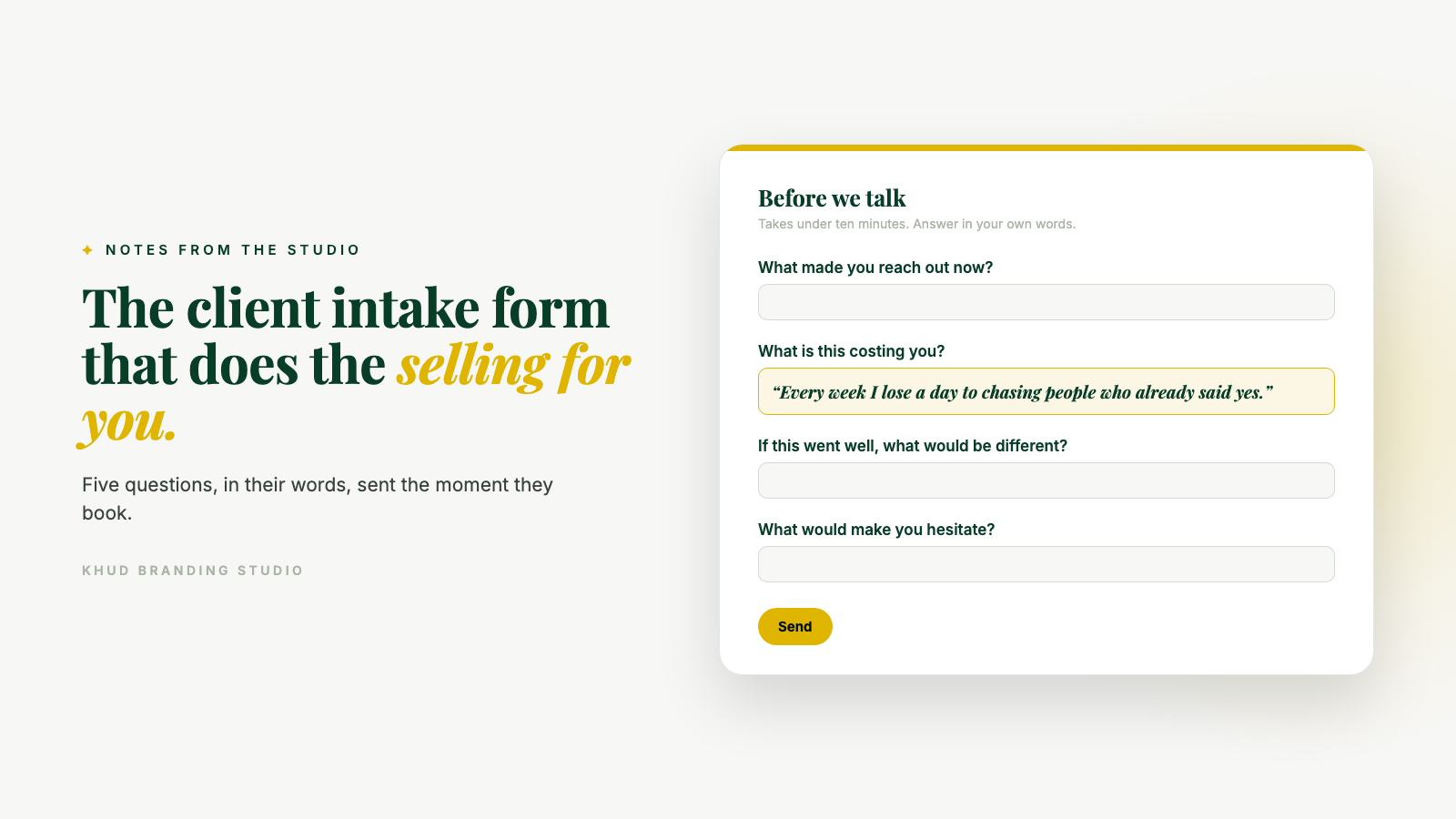
Somewhere in your inbox there is an intake form you built in a hurry. Name, email, business, what do you need help with. It collects the same three lines from everyone, and you read it thirty seconds before the call, if you read it at all.
A client intake form can do a great deal more than that. Built well, it is the first conversation, it is your call prep, and it is the reason the client feels understood before you have said a word.
What a client intake form is for
A client intake form is the set of questions a new client answers before your first real conversation. Its job is to get the client to describe their situation in their own words, so you can walk into the call knowing what they want, what it is costing them, and how to guide the conversation.
That is a different job from collecting contact details. Contact details tell you who is coming. The intake tells you why. If your form only does the first job, you are doing the second one on the call, out loud, with the clock running.
The questions that belong on it
Ask for stories, not categories. A dropdown that says marketing or operations gives you a label. A question that says tell me about the last time this cost you something gives you the client.
Five questions do most of the work. What made you reach out now. What have you already tried. What is this costing you, in whatever terms feel true. If we worked together and it went well, what would be different. What would make you hesitate to say yes.
Every one of those is a question you would ask in the first ten minutes of the call anyway. Asking them on the form means the client has already thought about the answers, and you have already read them.
What to leave off
Anything you can look up. Their website, their social handles, their company size. Anything that makes them feel screened. Budget ranges, revenue brackets, how did you hear about us. Anything that takes longer to answer than the form is worth. A client intake form should take under ten minutes and feel like being listened to, not like applying for a loan.
If a question is on the form because it is convenient for you rather than useful for the call, take it off. The form is for the client. The convenience comes on the call, when you already know what they need.
When the intake form should be sent
The moment they book. Not the day before the call, not in the confirmation email three days later. The instant the calendar slot is taken, the intake should be in their inbox, because that is the moment they are most ready to tell you what is going on.
Sent later, it feels like homework. Sent immediately, it feels like the work has started. The answers also come back richer, because the client is still in the state of mind that made them book.
How the answers become your call plan
Read the answers the night before, and read them once more ten minutes before. Pull out their exact phrase for what they want. Circle the cost they named. Find the sentence that hints at the objection. Decide what you are listening for.
Open the call by giving their words back to them. You said this has been costing you sleep since the spring. Tell me about that. The client hears that you read the form, that you remembered, and that the call is about them. From there, Diagnose Before You Prescribe™ runs itself. You have the diagnosis in their handwriting. The call is where you confirm it and decide together what to do.
What a good intake form does for the close
It removes the first fifteen minutes of every call, the part where you figure out who you are talking to. It surfaces the objection early enough to address it as a question instead of fielding it as a wall. It gives the client the feeling that you already understand, which is the feeling they are buying. And it gives you the words for the follow-up, because the follow-up should quote the same phrases the intake did.
The form does not close the sale. It makes the sale possible before the call starts.